
Hardware
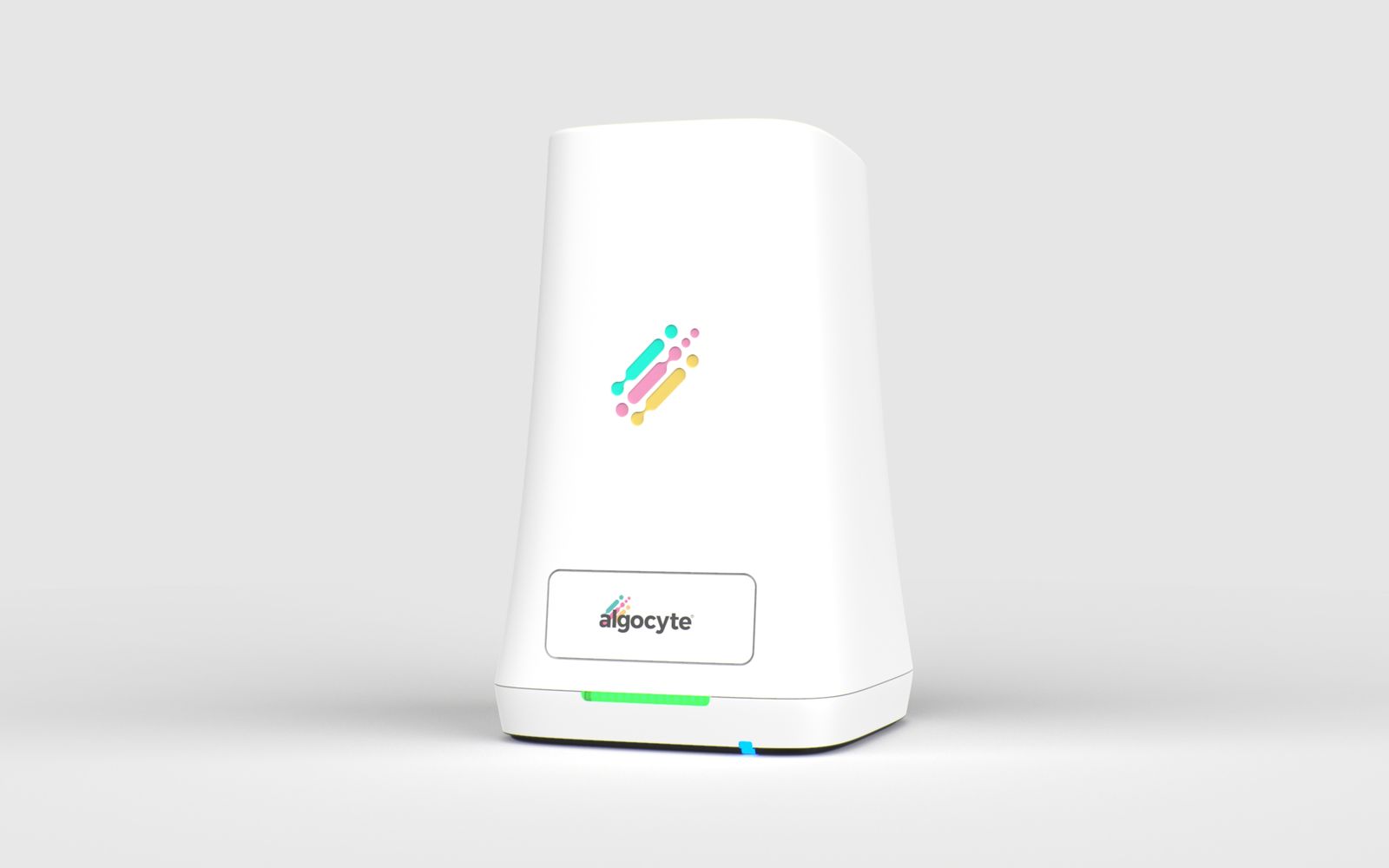
Algocyte Proxima
An ultra-portable, fully autonomous blood testing instrument designed for the home.
See Algocyte Proxima™Algocyte HealthHub™
The AI-driven diagnostics platform for Precision Healthcare and Predictive Medicine.
01
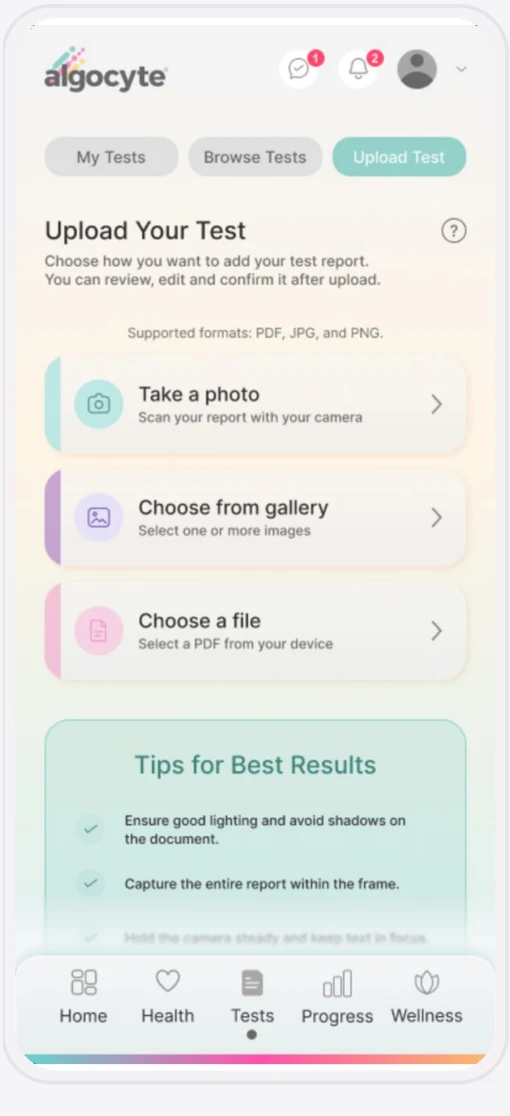
Laboratory and EMR results join patient-uploaded or scanned reports. Medical data of any kind, blood or otherwise, becomes machine-readable with its available source retained. Compatible home-device measurements, wearables, lifestyle and patient-reported information add context.
Patients and care teams retain the appropriate control over consent and access.
02
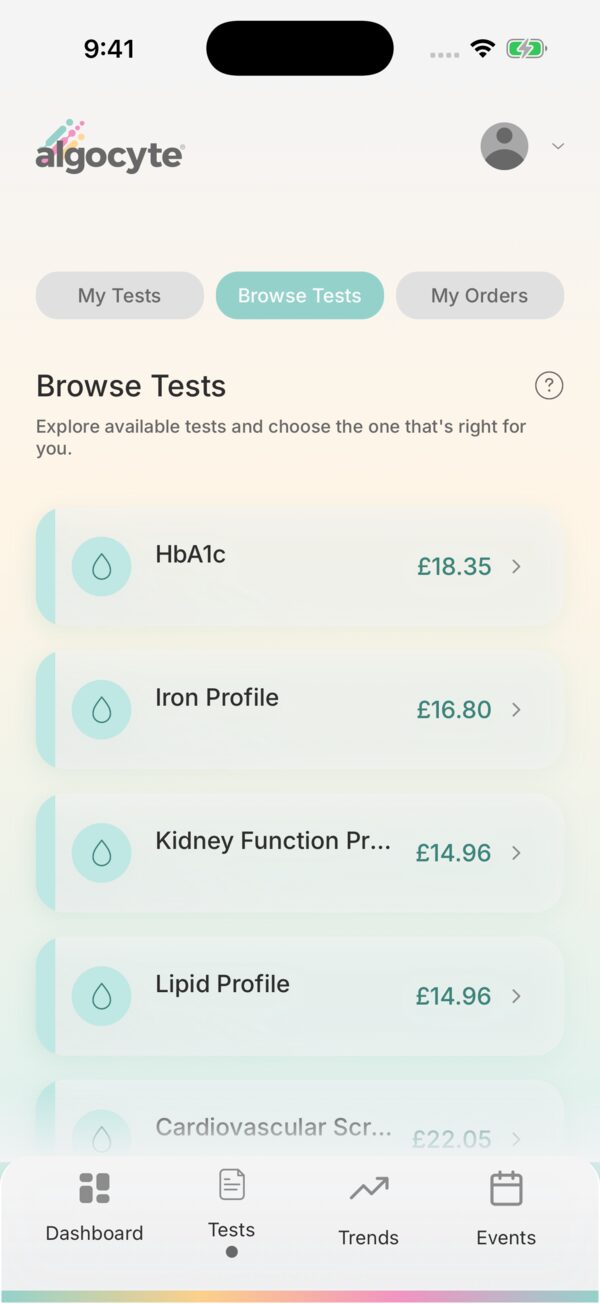
Laboratory tests can be requested through HealthHub using home self-testing or self-sampling kits from participating partners, with test-specific collection instructions. Nurse-led home collection is available where a participating partner serves the country or region. Test menus and collection options depend on local availability.
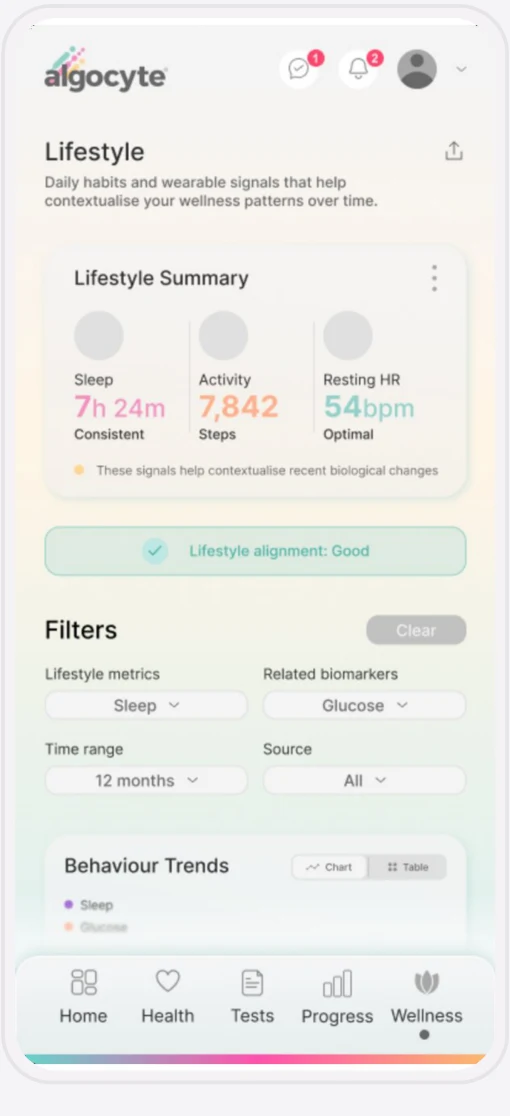
Results join symptoms, lifestyle, wearables and longitudinal trends in the clinical record, with the available source of each data point retained.
03
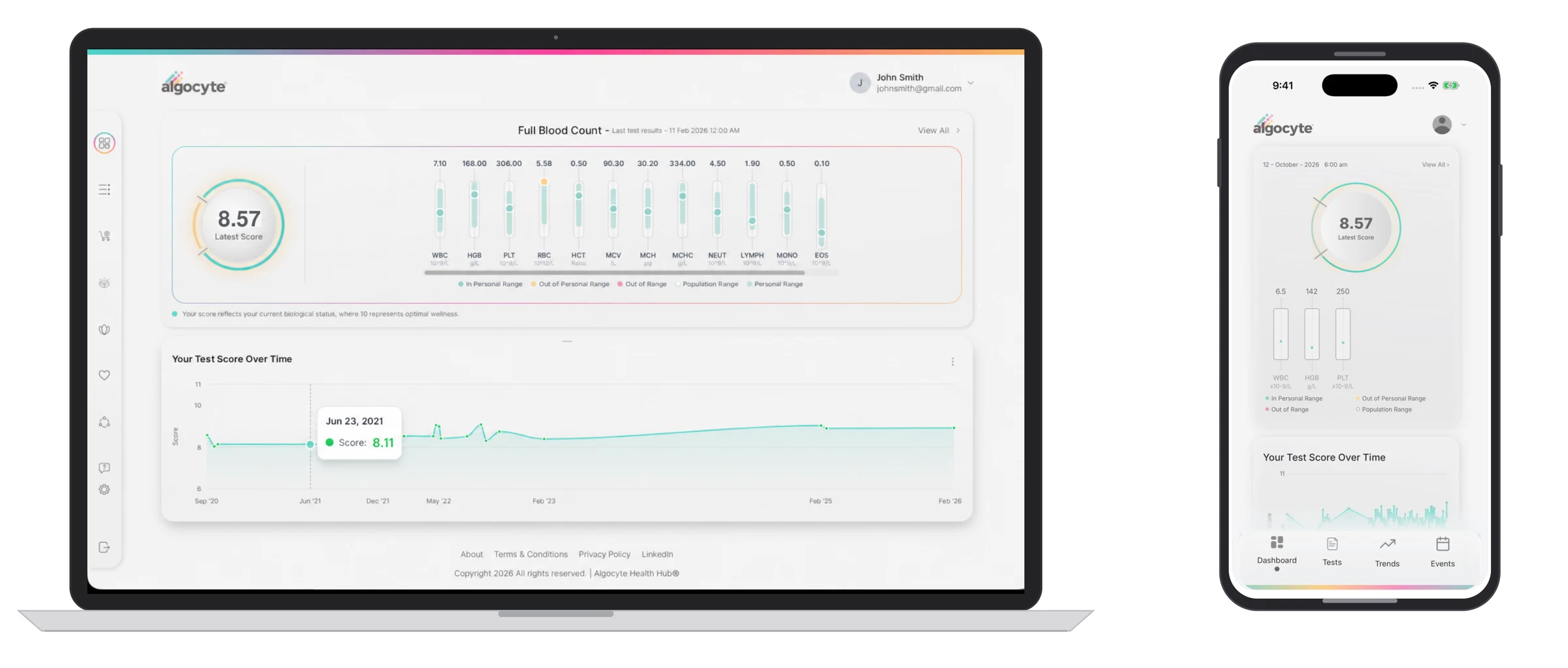
HealthHub learns physiological set points over time and derives personalised reference intervals alongside population ranges. A result can remain inside a population interval while its direction or pattern warrants closer review in that individual.
Population reference ranges describe a broad group and can miss what is normal for the person being reviewed.
A personal range learned from the individual's own history shows what changed, so a clinician can decide what to do about it.
Research on stable individual blood-cell set points supports the rationale for a personalised baseline [2]. Related longitudinal work is available as a preprint [3]. These references inform the approach; they do not independently certify HealthHub or guarantee a clinical outcome.
0–10
Composite risk assessment score
600K+
Records across NHANES and UK Biobank; analyses use eligible subsets
04
The Algocyte index is a composite risk assessment score (0–10) from routine blood markers, related to immune biological age and supporting triage and longitudinal review. Research draws on the US NHANES and UK Biobank repositories, which together contain more than 600,000 records; individual analyses use eligible subsets [1].
The index supports clinical review alongside the full record. Its 0–10 scale is a risk score rather than a literal age in years.
05 · Intelligence
Specialised Bayesian differential diagnosis for clinician-facing decision support.
Florence 1.0 and Ada 1.0 are AlgocyteGPt's specialised agentic large language models. Founded on Bayesian inference, they help create ultra-personalised questionnaires from all the multimodal data sources collected across the Algocyte ecosystem, to support differential diagnosis and build a clinical digital twin over time.
Ada 1.0 + Florence 1.0
Specialised AI Agents with Mechanistic Explainability.
Neurosymbolic causal AI supports blood interpretation, early detection from disease signatures and clinician-facing differential-diagnosis support. Informed by aggregated trends from 150M+ NHS blood-test results with clinical profiles, the system is designed to help shorten the diagnostic cycle and automate appropriate steps with clinician oversight [4].
06
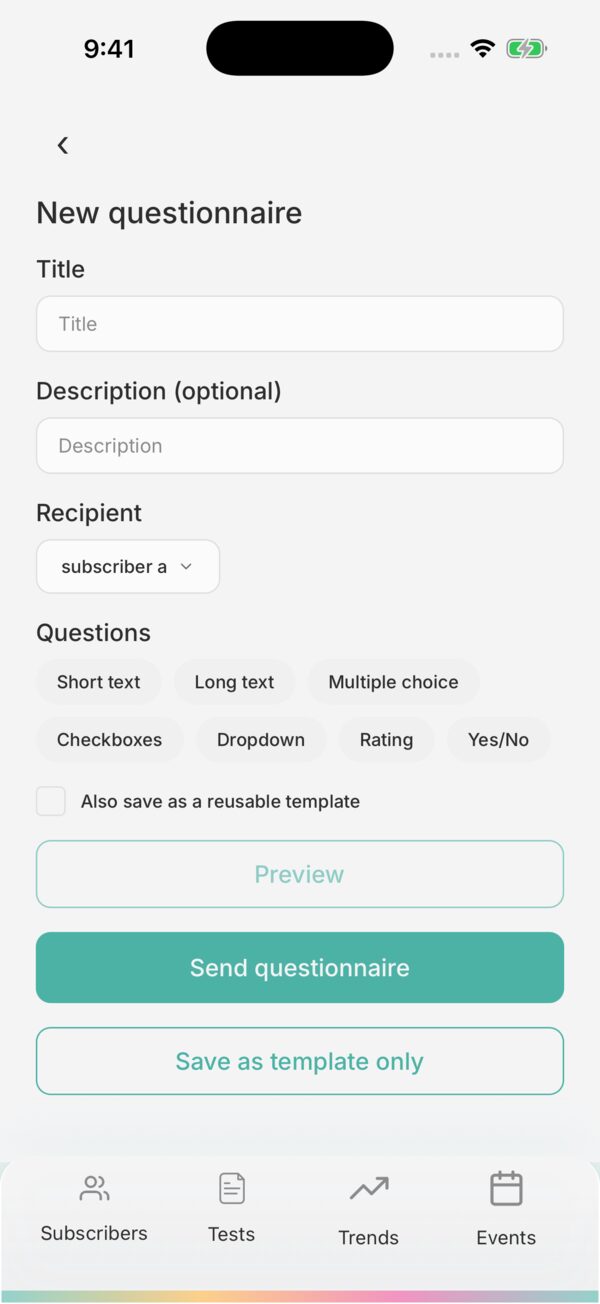
Automatically generated, ultra-personalised questionnaires combine medical data and blood results with patient responses, lifestyle and wearable information. They are fine-tuned to investigate diagnostic directions suggested by the available evidence.
Clinicians remain in control. They can delete, augment or tweak questions and use two-way communication to enrich the medical record. Each response and follow-up result can inform the next cycle of differential-diagnosis support.
07
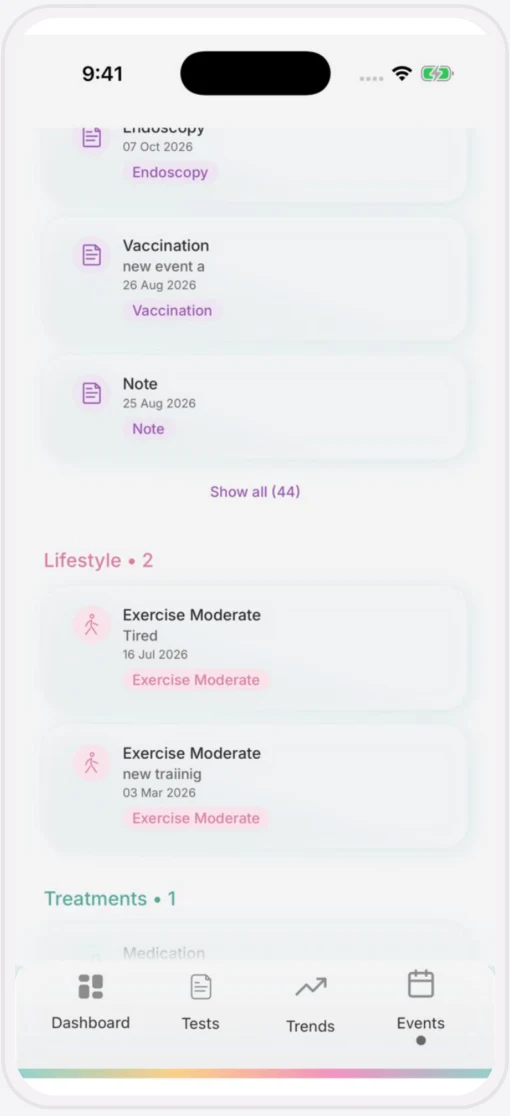
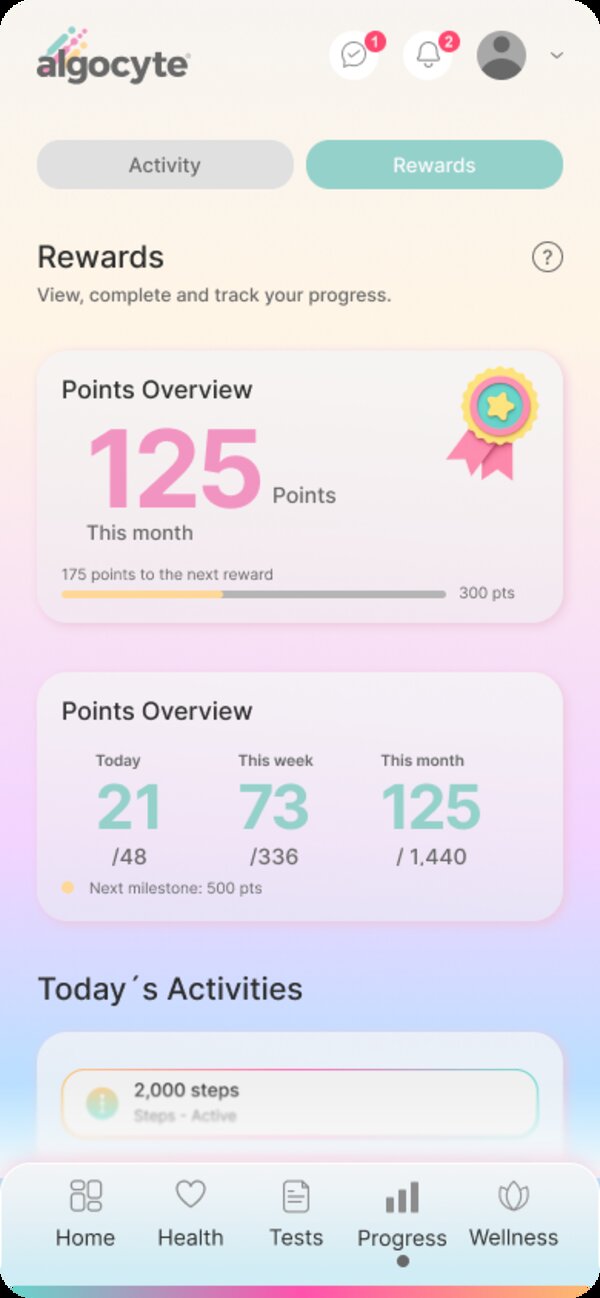
Patients can record symptoms, previous and current diagnoses, medicines taken, prescriptions, injuries, vaccinations and other requested events. Medication-adherence tools, incentives and rewards can support participation within the organisation's care programme.
Engagement, questions and workflows adapt to the organisation's business logic and the needs of its separate cohorts.
08
Measurements and longitudinal trends complement patient-reported symptoms, giving remote consultations a richer evidence base. Care teams can review change between appointments and direct follow-up using the combined clinical picture.
Granular, consent-based sharing: patients choose which providers can review selected health information, and can revoke access at any time.
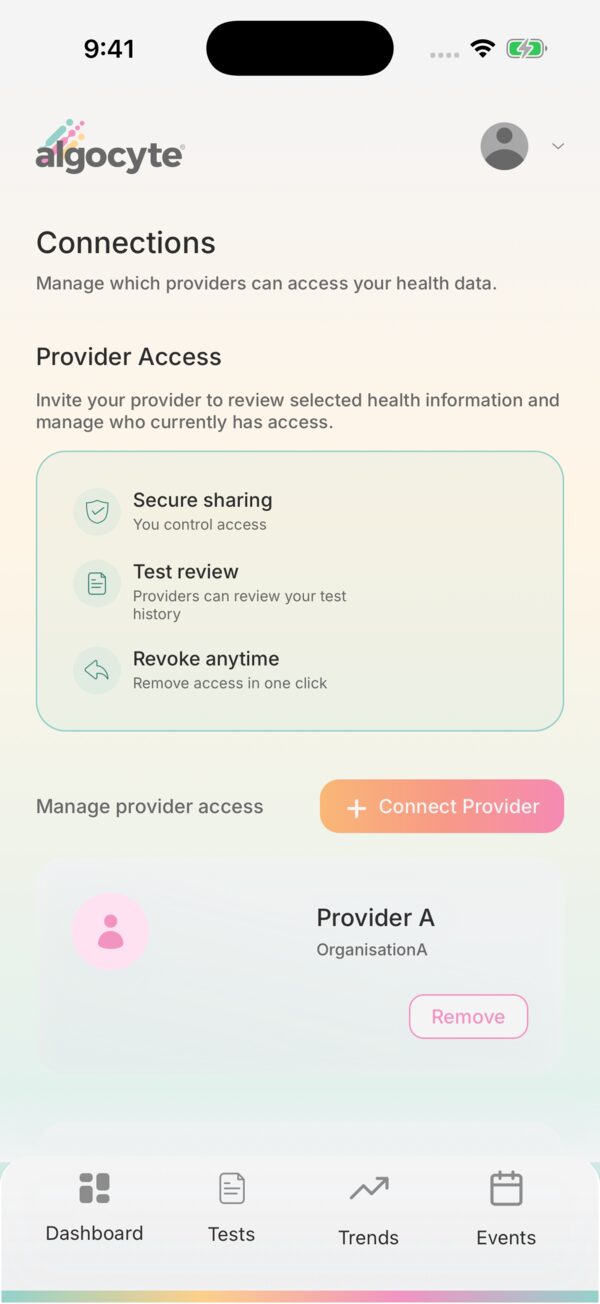
09
Each data point retains its available source history, whether it came from an uploaded or scanned report, a laboratory, an EMR, a wearable or a compatible home device, through interpretation and clinical review.
10
Integration capabilities through HL7 and APIs. Typical integration takes a few weeks, depending on local systems and scope. Organisation-specific business logic and ways of working are supported, with compartmentalised environments for separate cohorts.
Raw sensor signal streams from Algocyte Proxima with full provenance.
Lifestyle, wearables, subjective and objective data combine to learn the patient's personal reference ranges.
Physics-informed AI converts signal to clinically meaningful insight.
Alerts route to the right person via dashboard or app.
Population health
Algocyte HealthHub can be used to deploy national strategies for early epidemic detection. Trends in the Algocyte index, a composite risk assessment score related to immune biological age, inform regional and national health strategies. Predictive performance and deployment are subject to applicable validation and data governance.
Evidence and status
Research on the Algocyte index, individual set points and blood-data interpretation informs the approach. Algocyte platform Version R1 is CE-marked; the applicable status of additional modules and features depends on their version, intended use and market.

Within the wider ecosystem
A physical diagnostic route close to the patient complements existing laboratory, clinical and patient-contributed data, within the applicable intended use and clinical supervision for each component.
Meet Algocyte® Proxima™An ultra-portable, fully autonomous blood testing instrument designed for the home.
See Algocyte Proxima™
Single-use CE-marked cartridges and no cold chain required ready for plug-and-play operation.
See consumablesSee Algocyte in action.